
September 3, 2020 9:30 a.m.
Local wildland fire firefighters are on high alert for the holiday weekend.
Kyle Reed of the Douglas Forest Protective Association said that’s because the fire danger is currently at extreme throughout the Douglas District and temperatures are forecast to be in the upper 90’s to the triple digits.
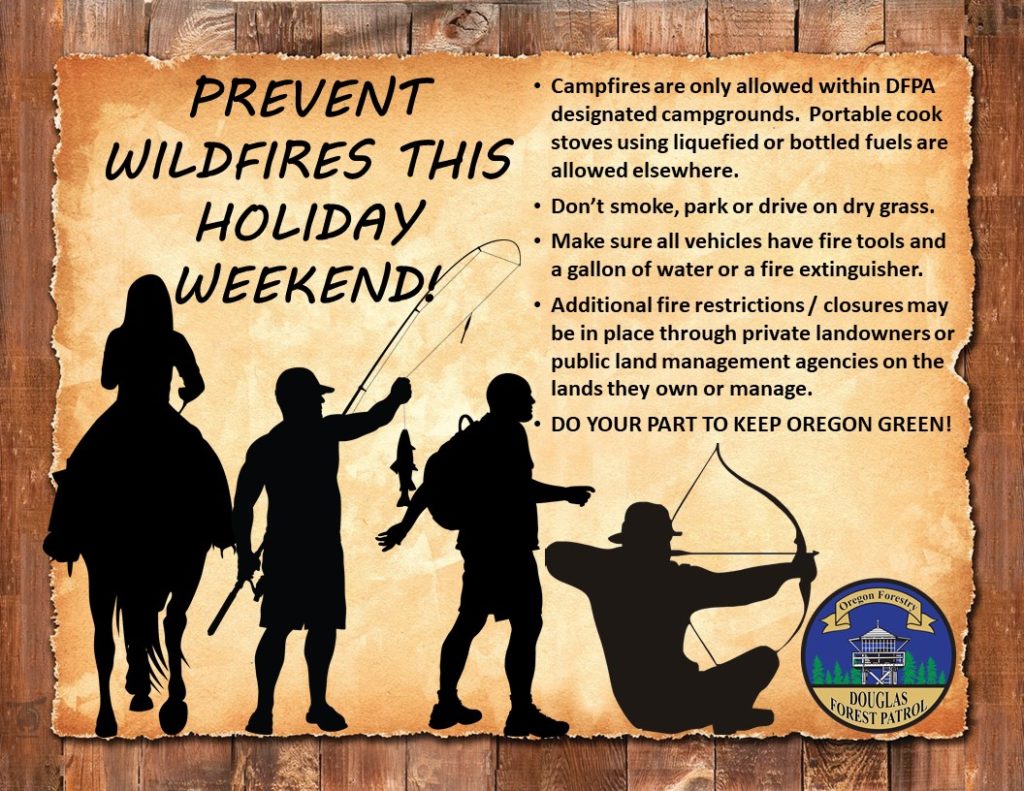
Reed said DFPA is reminding everyone to be cautious whether they are having a backyard barbecue or are heading to a lake for a weekend camping trip.
Reed said campfires pose a major threat this time of year as it only takes one spark landing in dry vegetation to start a new wildfire. Currently campfires are only allowed in designated campgrounds. Portable cooking stoves using liquified or bottled fuels are allowed elsewhere.
Reed said over the years, fires have been ignited from wheel bearings going out, flat tires, dragging chains and vehicle malfunctions. Drivers often didn’t realize there was a problem until multiple fires were started over a distance of a mile or more. Those planning to drive through a wildland area are reminded that vehicles are required to stay on improved roads that are free of flammable vegetation, and are required to have an axe, a shovel, and a gallon of water or 2.5 pound or larger fire extinguisher.
The DFPA release said a day of target practice can also start a fire. Tracer ammunition and exploding targets are prohibited during fire season.
Reed said those who stay home to catch up on yard work are still in danger of starting a wildfire. Lawnmowers, weed eaters, and chainsaws can all easily start a fire this time of year. Under DFPA’s Public Use Restrictions, the mowing of dead or dry grass and the use of chainsaws for non-industrial purposes is currently prohibited due to the extreme fire danger. All backyard debris burning, including debris piles and burn barrels, also remains prohibited.
In addition to DFPA’s Public Use Restrictions, private industrial landowners and public land management agencies may have additional closures or restrictions in effect on lands that they own or manage.
For more information about DFPA’s Public Use Restrictions, go to www.dfpa.net.